
Rohan Jay wins Summer 2026 PURA Award!
Congratulations to Rohan Jay who has joined a long and prestigious crowd of LIMBS Lab PURA awardees!

Congratulations to Rohan Jay who has joined a long and prestigious crowd of LIMBS Lab PURA awardees!
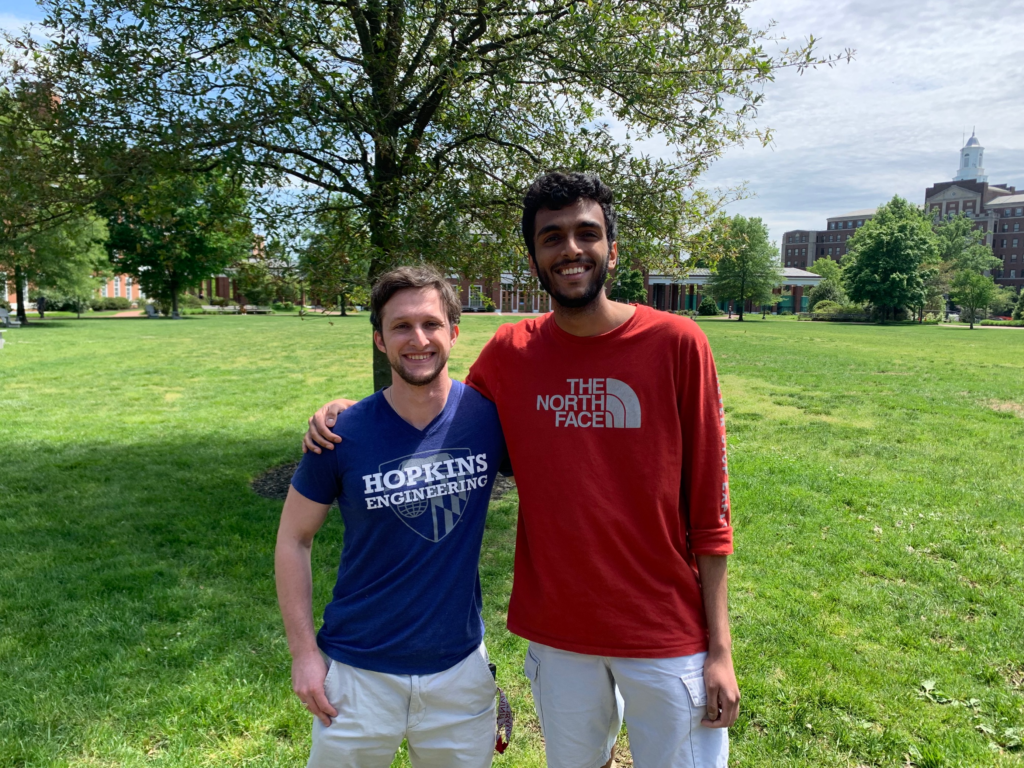
Michael Wilkinson and Bharath Krishnan were both awarded prestigious Doctoral Fellowships from the Kavli Neuroscience Discovery Institute. Michael’s project is supervised by Prof. Cowan and co-supervised by Prof. Cindy Moss (PBS Dept) and Barath’s primary advisor is James Knierim (Neuroscience Dept.) and co-supervised by Prof. Cowan.
Congrats!
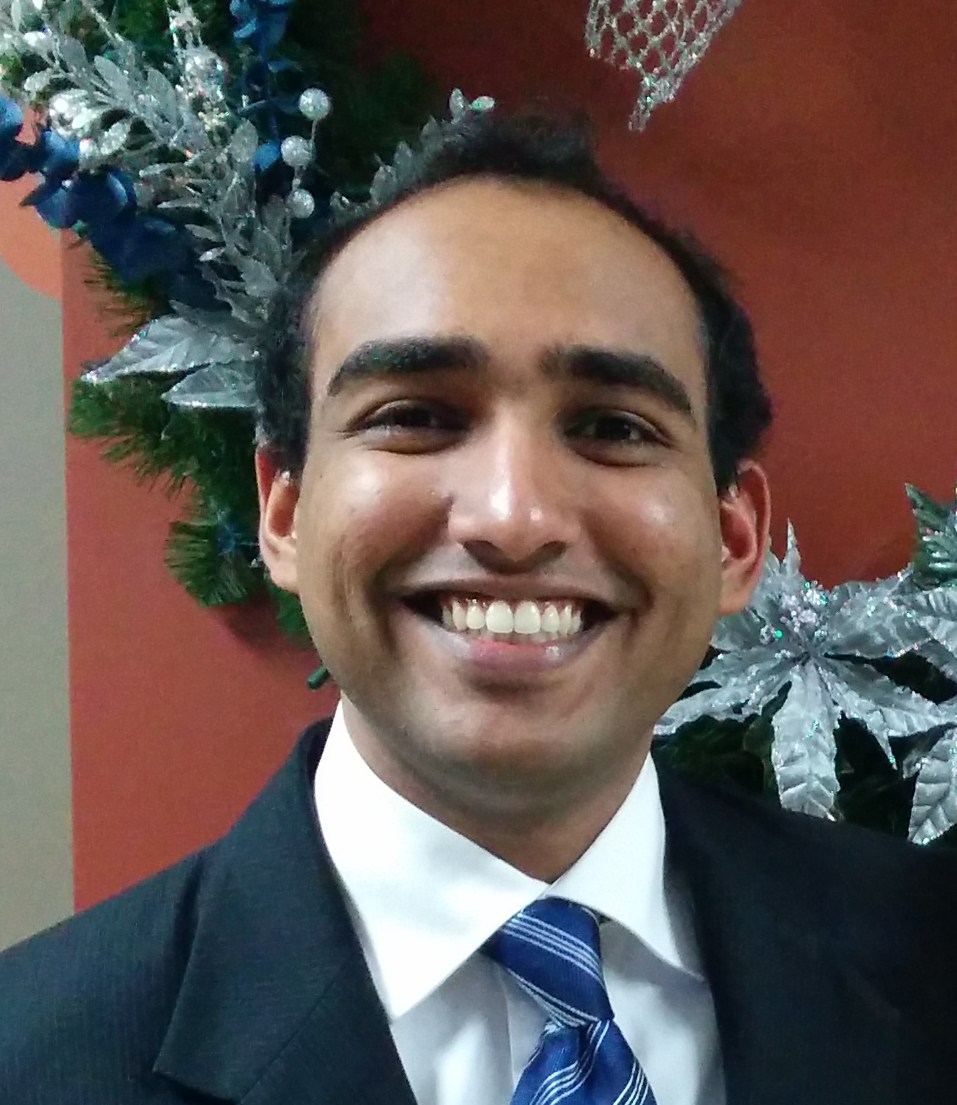
Each year the Society of General Physiology names four students as SGP Scholars, one each from four MBL advanced training courses at Woods Hole. This year, Manu Madhav was selected to receive this honor from the Neural Systems and Behavior course. Congrats Manu!
 Dr. Manu Madhav won the 2017 Kavli Postdoctoral Fellowship from the Neuroscience Discovery Institute for his proposal, entitled “Stabilizing the cognitive map with real-time feedback in virtual reality to quantify the influence of optic flow”.
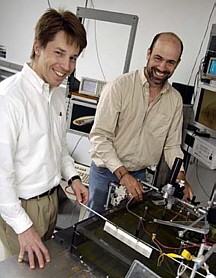 LIMBS Lab director Noah Cowan and his colleague, neuroscientist Eric Fortune, were awarded a $805,000 grant from the National Science Foundation, entitled “Neural Mechanisms of Active Sensing”.
Animals, including humans, routinely use movement to sense the world around them. For example, to sense the texture of an object, a person might move her hand over the surface, whereas to measure the object’s weight, she might hold it in her palm and move it up and down. This use of different movements to sense features of the environment is called Active Sensing. Although active sensing is commonplace in human behavior, how the brain generates and controls these movements is poorly understood. The goal of this project is to reveal and describe (in mathematical equations) the brain’s strategies for active sensing. This will be achieved by studying a specialized animal species, the weakly electric glass knifefish. This animal was chosen because it has a suite of properties that make it ideally suited for the experimental approach. The expected findings will have broad implications for active sensing in other animals (including humans) because active sensing behaviors are similar across species. This work will have broad societal impacts, including the possible transformation of robotic control systems and enhanced understanding of the brain that may ultimately improve our understanding of neurological disorders. Further this work includes multidisciplinary training of promising students in critical STEM fields.
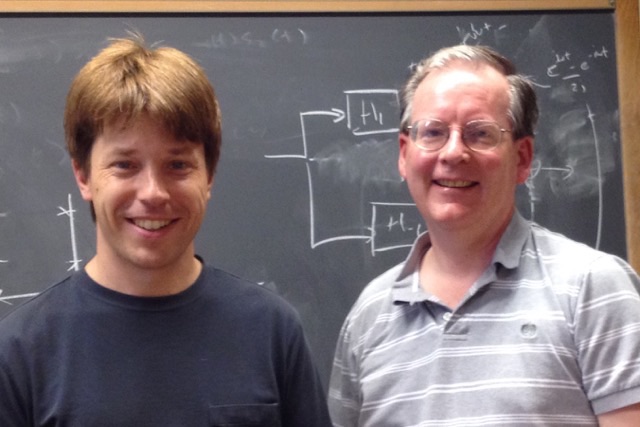 How do you keep track of where you are as you walk through a known environment, such as your house or a shopping mall? To study this question, Mechanical Engineering professor Noah Cowan and Neuroscience professor James Knierim were selected to receive two awards that aim to use engineering approaches to shed new light on the brain’s “inner GPS”.
Prof. Noah Cowan was awarded a grant with University of Maryland (PI: Dr. Tim Kiemel):
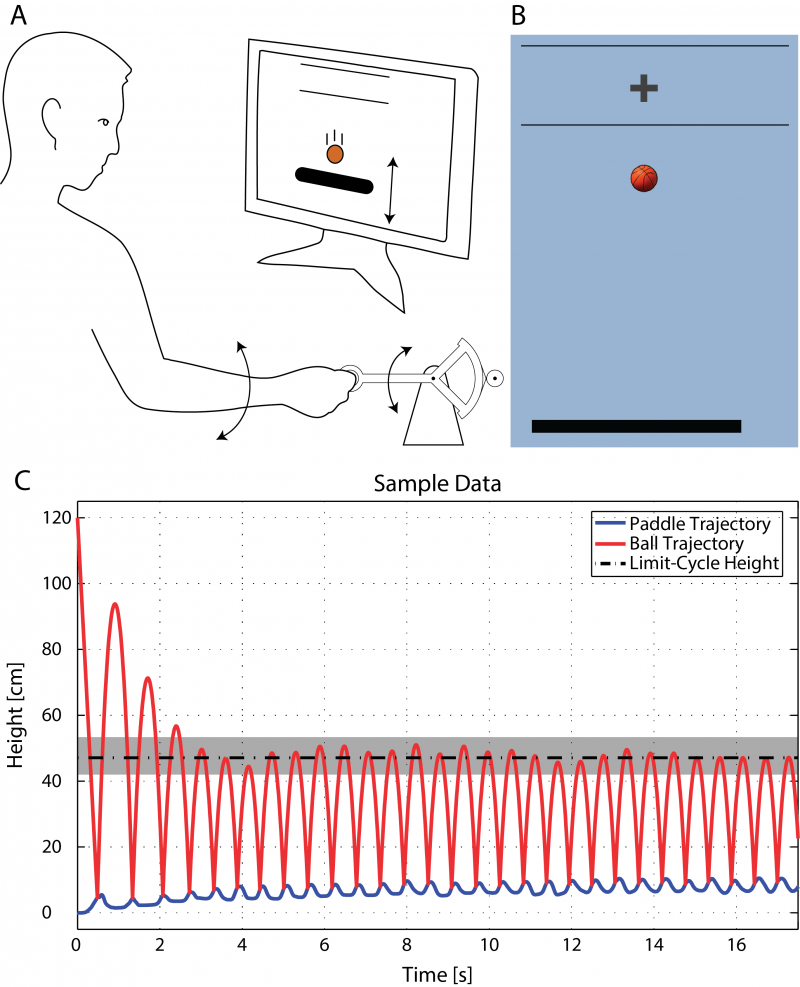
Collaborative Research: Understanding the Rules for Human Rhythmic Motor Coordination
Details:
More information: